
Moving House Checklist Melbourne: Four Weeks to Moving Day
Start with your moving date, inventory and access: use this four-week Melbourne moving checklist to work backwards from moving day. List what is going, arrange access at both addresses, pack non-essential items first and confirm the remaining tasks with your moving team.
If you have less than four weeks, use the same order of priorities: booking and key handover first, then access, packing and the final walkthrough. Assign each task to a person and keep your inventory, photos and booking details together so changes can be shared before the move.
Who this checklist helps
Use this checklist for a Melbourne house, townhouse, unit or apartment move. Adjust the packing schedule to your inventory and the access arrangements at each property; a smaller home with stairs or a booked lift still needs preparation.
- Units and apartments: check lift bookings, building rules and the route between the property and the truck.
- Larger households: include garage storage, outdoor furniture, appliances and cartons in the inventory, not just bedroom furniture.
- Access-heavy homes: benefit from early photos of parking, stairs, driveways, hallway turns and large furniture.
- Family moves: need a clear first-night box, labelled rooms and a delivery plan so unpacking does not become chaotic.
Request a free moving quote Add both suburbs, bedroom count, access photos and large-item notes so we can recommend the right truck.
Your moving timeline at a glance
| When | Priority |
|---|---|
| 4 weeks before | Confirm the date, prepare a room-by-room inventory, declutter and arrange the moving booking. |
| 3 weeks before | Pack non-essential items, label destination rooms and send access and bulky-item photos. |
| 2 weeks before | Confirm key handover, building or lift arrangements and any dismantling responsibilities. |
| 1 week before | Update the carton count, confirm the arrival window and parking, and set aside first-night essentials. |
| Moving day | Walk through the inventory and access with the movers, identify items staying behind and confirm delivery rooms. |
Why a short local move still needs preparation
A short drive does not remove the work at either property. Unfinished packing, loose items, unconfirmed parking or furniture that will not fit through a doorway can change the plan even when the two addresses are nearby.
Before the truck arrives, make clear which items are moving, where the team can load and what must be kept separate. The movers can then assess the handling and loading sequence against the actual items and access, rather than a fixed rule about which furniture goes first.
Confirm the truck against your inventory and access
Do not choose by bedroom count alone. Send a furniture list, approximate carton count, bulky-item dimensions and photos of the loading position at both addresses. Include outdoor and garage items, and confirm any extra pickup or delivery stop. A larger truck still needs a suitable approach and loading space.
The 5, 10 and 12 tonne overview below is a starting point. For the details to compare before booking, use our Melbourne moving truck size guide.
4 weeks before moving
This is the time to reduce the size of the move. The fewer unnecessary items that go into the truck, the easier it is to protect the items that matter.
- Walk through every room and decide what will be moved, sold, donated or disposed of.
- Start a room-by-room box list so the moving team can understand the load size when quoting.
- Measure large furniture, especially wardrobes, bed frames, dining tables, fridges and oversized lounges.
- Check if any furniture needs to be dismantled before moving day.
- Book your preferred moving date early, especially for Friday, Saturday and end-of-month moves.
- Confirm a suitable truck option against your full inventory and the access at both properties.
If you are comparing options, review JD Movers' Melbourne removalist cost guide and then send photos or a short inventory through the quote form. Photos help us recommend the right truck size before the day.
3 weeks before moving
Three weeks out is when the move should start becoming visible. Boxes should be labelled, non-essential items should be packed, and access details should be checked.
- Pack items you do not use daily, including books, spare linen, decorations and seasonal items.
- Label each box with the destination room, not just the contents.
- Separate fragile boxes and mark them clearly on at least two sides.
- Start a list of heavy or awkward items, such as piano, safe, marble table, glass cabinet or large plants.
- Check driveway width, low branches, steep slopes, narrow streets and parking restrictions.
- Tell the moving company if the truck needs to park on the street or reverse into a driveway.
This is also the right time to think about insurance and risk. Larger moves involve more furniture, more stairs and more loading decisions, so it is worth reading the removal insurance information before the move.
For carton choice, weight, closure and room labels, follow our moving-box packing guide as you work through each room.
2 weeks before moving
Two weeks before the move, the job should be shifting from general planning to practical access and packing. This is where many Melbourne moves either become smooth or start to run behind.
- Confirm settlement, key collection or handover timing if it affects delivery access.
- Check whether any building manager, body corporate or neighbour needs notice.
- Arrange lift bookings if either address has lift access.
- Move garden tools, loose garage items and small outdoor items into one section.
- Remove items from drawers if the furniture is heavy, fragile or difficult to carry.
- Group valuable documents, passports, laptops, medication and chargers separately so they do not go into the truck by mistake.
Confirm who will dismantle furniture, disconnect appliances where required and prepare any item needing special handling. Share changes to the inventory or access now, including delayed keys or a different lift window, so the agreed moving plan can be reviewed.
1 week before moving
The final week is where a moving checklist earns its value. By this stage, most non-essential packing should be complete and the remaining work should be about confirmation.
- Confirm the moving date, arrival window, pickup suburb, delivery suburb and truck size.
- Send any updated photos if you have packed more boxes than expected.
- Keep tools, screws and furniture parts in labelled bags.
- Prepare fridge and freezer timing so they can be moved safely.
- Clear hallways, stairs, doorways and the garage path.
- Confirm where the truck can park at both addresses.
- Keep one essentials box aside for the first night in the new home.
If you want a more detailed final-week plan, see our final week moving checklist for Melbourne.
Moving day checklist
On moving day, the best result comes from a clear first 10 minutes. The customer does not need to carry furniture, but they can save time by showing the team the access, the fragile items, the rooms and the priority pieces.
- Show the movers the largest and heaviest items first.
- Point out fragile furniture, glass, marble, TV boxes and artwork.
- Confirm which items are not going into the truck.
- Keep children, pets and personal bags away from the loading path.
- Use one person as the main contact so instructions stay consistent.
- At delivery, tell the team the room destination for each major item before unloading starts.
At the new address, use the same room names as your carton labels and point out any items you need first. Before the team leaves, check the agreed rooms and inventory together and raise any questions about placement or the completed scope.
Furniture protection and loading method
The photo shows furniture, moving blankets and a fridge inside a removal truck. Use your own inventory and item photos to discuss protection needs; the handling method and loading order depend on the actual items, their condition and the available access.
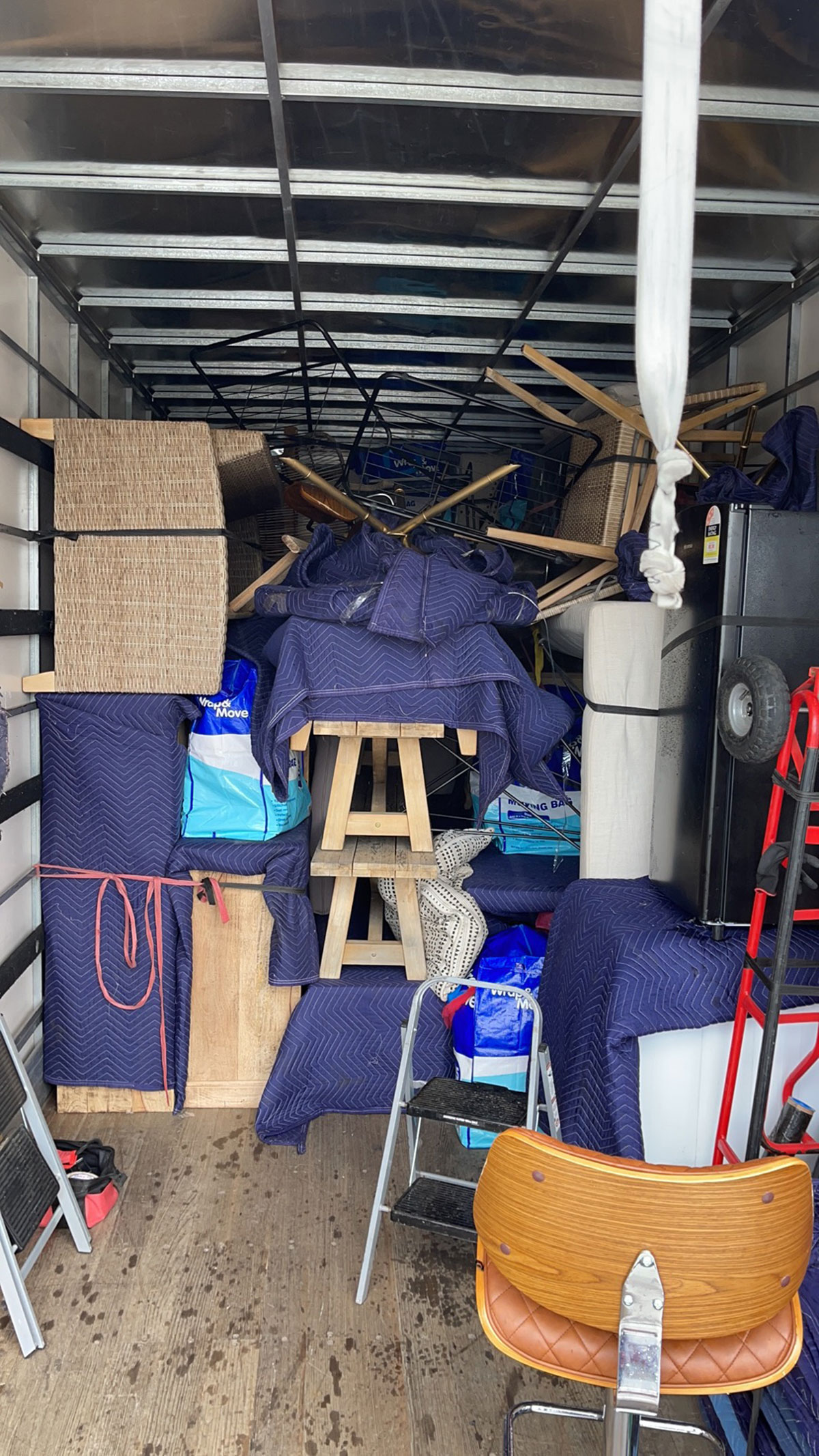
Discuss these protection and loading points with the moving team:
- Wrapping exposed furniture surfaces before loading.
- Keeping heavy items low and stable.
- Using blankets and padding around furniture edges.
- Keeping fragile boxes separated from heavy boxes.
- Loading mattresses and flat panels upright where safe.
- Checking that loose items are secured before transport.
You can read more about this service on our furniture removals Melbourne page.
Trust proof from Melbourne customers
JD Movers has built its reputation through real Melbourne moving work across homes, apartments, offices and larger family relocations. One 5-star Google reviewer described their belongings as “stacked properly and safely”, which is exactly what a larger truck move needs.
That is the type of trust signal a customer should look for before booking a 10 tonne or 12 tonne move: careful truck positioning, professional handling, efficient loading and respectful communication at both addresses.
You can also view more customer feedback on our testimonials page.
Useful JD Movers pages for planning this kind of move
- Removal services Melbourne
- Furniture removals Melbourne
- Removal insurance information
- Wantirna South removalists
- Glen Waverley removalists
- Request a free moving quote
5, 10 and 12 tonne truck planning
JD Movers does not choose a truck by suburb name alone. We compare the property type, bedroom count, box estimate, lift or stair access, parking distance, bulky furniture and whether the job is a full home move, apartment move, office move or selected-item move.
| Truck option | Best fit | Planning note |
|---|---|---|
| 5 tonne truck | 1-2 bedroom units or apartments, small item lists, student moves, compact access or partial furniture moves. | A 5 tonne truck is useful when the load is smaller and parking or apartment access is tighter. |
| 10 tonne truck | 3-4 bedroom apartments, units, townhouses or prepared smaller homes with boxes, beds, lounges and whitegoods. | A 10 tonne truck gives more capacity for a normal household load while still being practical for many Melbourne streets. |
| 12 tonne truck | 4-5 bedroom homes, larger family moves, garage items, outdoor furniture, heavy pieces or commercial stock. | A 12 tonne truck is better when volume, bulky furniture or loading separation matters more than compact access. |
For a more accurate quote, send the pickup and delivery suburbs, property type, bedroom count, box estimate, stairs or lift details, parking notes and photos of large or fragile items.
FAQs about moving house in Melbourne
Is a 10 tonne or 12 tonne truck better for my move?
A 10 tonne truck is usually suitable for many 3-4 bedroom moves. A 12 tonne truck is often better for 4-5 bedroom style homes, large furniture loads, garage storage, outdoor items and bigger box counts.
How early should I book a Melbourne removalist?
Book as early as you can once your moving date is likely. Friday, Saturday, end-of-month and settlement-period moves can fill quickly, so earlier booking gives you better truck and time options.
Do I need to pack everything before the movers arrive?
Most loose household items should be packed before the team arrives. Large furniture, whitegoods and wrapped furniture can be handled by the movers, but loose small items slow the job down and increase the risk of missing pieces.
What should I tell JD Movers when requesting a quote?
Tell us both suburbs, property type, bedroom count, stairs, lift access, parking, heavy items, approximate box count and any unusual furniture. Photos of rooms, garage storage and bulky items help us recommend the right truck size.
Can JD Movers help with larger family home moves?
Yes. JD Movers handles apartment, townhouse, family home and office moves across Melbourne, including larger 10 tonne and 12 tonne truck moves where planning, access and protection are important.
Ready to plan your move?
If you are moving from Wantirna South, Glen Waverley or another Melbourne suburb, send us your suburb route, bedroom count, photos and access details. We will help you choose a suitable truck size and moving plan.
Get a free moving quote and include photos of access, stairs, parking and larger furniture so the moving plan matches the real home.