
Moving Truck Size Guide Melbourne: 5, 10 and 12 Tonne Options
Choosing a moving truck is not as simple as matching one vehicle to a bedroom count. A one-bedroom apartment with a storage cage, oversized lounge and difficult lift access can need a different plan from a lightly furnished two-bedroom unit. A larger home may also fit efficiently when the inventory is accurate, cartons are ready and the truck can park close to the entrance.
This guide compares JD Movers’ 5, 10 and 12 tonne truck options by inventory, access and likely trip count. Use the bedroom ranges as a starting point, then send an item list and access photos so the vehicle and crew can be assessed for your move.
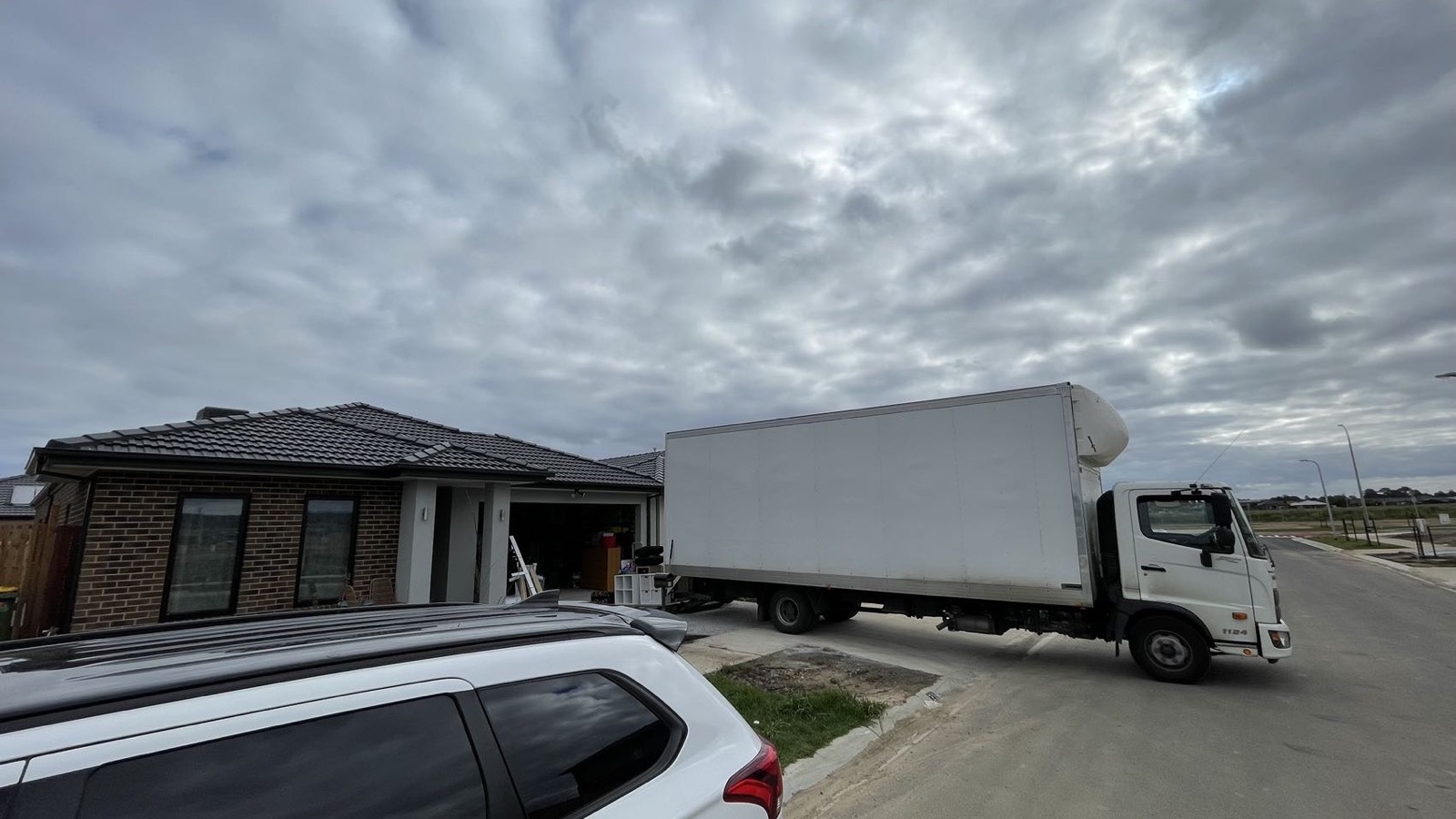
Quick answer: a 5 tonne truck is a common starting point for many 1-2 bedroom units or apartments, a 10 tonne truck for many 3-4 bedroom moves, and a 12 tonne truck for many 4-5 bedroom homes. These are planning ranges, not guarantees. The actual inventory, access, packing, parking and number of stops decide the recommendation.
Request a free moving quote and send an inventory plus access photos if you want JD Movers to compare the available truck options for your move.
5, 10 and 12 tonne moving truck comparison
| Truck option | Common planning range | Details that can change the recommendation |
|---|---|---|
| 5 tonne truck | Many 1-2 bedroom units or apartments, partial moves and selected-item jobs | Storage cages, bulky furniture, lift bookings, stairs, parking distance and whether a second trip would be practical |
| 10 tonne truck | Many 3-4 bedroom units, townhouses or homes with a prepared inventory | Garage and outdoor contents, high carton count, large appliances, driveway access and delivery order |
| 12 tonne truck | Many 4-5 bedroom homes, larger inventories and moves where reducing trips matters | Legal parking space, narrow streets, trees, slopes, loading zones, multiple pickups and oversized items |
Why bedroom count is only a starting point
Bedroom count is useful because it gives a quick indication of likely volume, but it does not describe the whole property. Two homes with the same number of bedrooms can have very different amounts of furniture, cartons and stored items. A garage, shed, balcony, study, storage cage or outdoor area can add substantial volume without changing the bedroom count.
Furniture style matters as well. Modular pieces that can be dismantled use space differently from fixed cabinets, long dining tables, large lounges and tall appliances. The quote should therefore be based on the item list and access, with the bedroom range used as a cross-check rather than the only measurement.
When a 5 tonne truck may suit
A 5 tonne truck is commonly considered for many 1-2 bedroom units or apartments, smaller home inventories, partial moves and selected furniture jobs. It can be useful where the inventory is compact or where a larger truck would be difficult to position. However, a smaller vehicle does not automatically mean a faster or cheaper total move. If the load requires a second trip, the extra travel and repeated access can change the result.
For apartment work, send the lift size, loading-bay booking, height limits and distance from the legal truck position. For a unit or townhouse, include stairs, narrow turns and driveway photos. These details help determine whether a 5 tonne truck is practical for the actual building.
Check the small-load items that are easy to miss
Before asking for a 5 tonne option, add balcony furniture, storage-cage items and any extra pickup to the list. Flag pieces that must remain assembled. If another trip may be needed, ask how its travel time and access windows would affect the moving plan.
When a 10 tonne truck may suit
A 10 tonne truck is a common planning option for many prepared 3-4 bedroom moves. It can also suit larger apartment, unit or townhouse inventories when access allows the vehicle to park and load safely. Compared with a smaller truck, the extra capacity may help keep a fuller inventory together and reduce the risk of an avoidable second trip.
An incomplete item list can underestimate the load. Include furniture and cartons from every room, plus whitegoods, garage storage, outdoor settings, gym equipment, shelving and anything held off-site. A 10 tonne recommendation should be checked again when the home contains many bulky pieces or when the delivery has restricted access.
Separate bulky items from the carton count
List non-stackable furniture, large appliances and packed cartons separately. Note which pieces can be dismantled and whether that work is arranged. These details help the team assess usable loading space without relying on a bedroom count alone.
When a 12 tonne truck may suit
A 12 tonne truck is commonly considered for many 4-5 bedroom homes, larger household inventories and bookings where keeping the load together may reduce trip count. It can also provide more separation for a broad mix of declared items. The larger vehicle still needs a suitable legal position at both addresses, so capacity cannot be considered separately from street and driveway access.
Tell the removalist about low branches, tight courts, steep driveways, basement height limits and loading-zone rules. A 12 tonne truck that fits the inventory but cannot reach a practical loading position may not be the most efficient plan. Access photos should show the street approach as well as the doorway.
Check loading order for a larger inventory
Group items by destination or room and identify anything needed soon after arrival. For a multi-stop move, flag which items must be unloaded first. Ask the team to confirm that the proposed truck can use the intended loading position at each address before booking.
How access can change the truck choice
Street parking and loading zones
The truck needs enough lawful space to stop without blocking traffic, driveways or restricted areas. Measure the available length, check signs and tell the team about school zones, clearways, permit areas or timed loading bays. A longer carrying distance can affect the plan even when the truck has enough capacity.
Driveways and turning room
Driveway width, slope, overhead clearance and turning space should be checked before moving day. A photo taken from the street is often more useful than a close-up of the garage because it shows how the vehicle approaches and leaves the property.
Apartment lifts and basement limits
Building managers may require a lift booking, loading-bay reservation, access fob or insurance document. Basement height limits can rule out some vehicles. Confirm these restrictions before finalising the truck rather than discovering them when the crew arrives.
Stairs and internal carrying paths
Truck size does not remove the work inside the property. Stairs, narrow hallways, sharp corners and long carries can influence crew planning and working time. Send photos and measurements for oversized items so the carrying route can be assessed separately from vehicle capacity.
Should you choose a larger truck to be safe?
A larger truck can be useful when the item list is close to the upper end of a vehicle range, but choosing the biggest option without checking access is not always better. The aim is to match usable capacity to the real load and the tighter of the two properties. Parking, driveway geometry and building rules still apply.
The best way to reduce uncertainty is to provide a room-by-room inventory, carton estimate and clear photos. JD Movers can then compare whether one larger load or another arrangement is more practical. No truck size should be promised from bedroom count alone.
Truck size and crew size are different decisions
A larger truck does not automatically require a larger crew, and a smaller truck does not always mean that two movers are enough for every situation. Crew planning can depend on stairs, carry distance, heavy or awkward declared items, building time windows and how quickly access must be cleared.
Ask the quote to specify both the vehicle option and the crew size, with any assumptions about stairs, carrying distances and specialist items.
If your inventory includes an upright piano or a pool table, review our piano moving service or pool table moving service before choosing a truck. Item dimensions, weight and the carrying route need a separate assessment. For a business move, our office relocation service explains the access, furniture and scheduling details to send with your inventory.
Multi-stop and storage moves
For a move with storage, a second pickup or more than one delivery, list every stop separately. The team needs the inventory, access and contact arrangements for each address. Loading order should support the stop sequence so early-delivery items are not placed behind items needed later.
Storage work also needs the unit level, access hours, trolley distance and any height restriction. If selected items must remain accessible after delivery, identify them before loading. These factors can affect usable capacity even when the total volume appears straightforward. For the complete workflow, see our moving furniture into storage Melbourne guide.
Information to send for a truck recommendation
- Pickup, delivery and any additional stop suburbs.
- Property type and bedroom count as an initial guide.
- A room-by-room furniture and appliance list.
- An estimated carton count, including books and dense items.
- Garage, shed, balcony, outdoor and storage-cage contents.
- Photos and dimensions of large, heavy, fragile or awkward items.
- Stairs, lifts, hallways, door widths and long carrying distances.
- Truck parking, driveway, loading-bay and height-limit details.
- Items that need dismantling, packing or special preparation.
- The preferred moving date and any fixed building time window.
Common truck-size mistakes
Counting rooms but not their contents
A bedroom count can miss a full garage, study, outdoor area or storage cage. List those areas separately so the estimate reflects the real volume.
Assuming a short route needs a small truck
Travel distance and load volume are different. A move between neighbouring suburbs can still require substantial capacity, while a longer route may involve a compact inventory.
Choosing a small truck without comparing trip count
A smaller truck may fit the street more easily, but repeated trips can add loading, unloading and travel. Compare the whole plan rather than the first vehicle rate alone.
Ignoring the destination
The pickup may have excellent access while the delivery has a narrow street, basement or long carry. The tighter address often determines the practical vehicle and handling plan.
Trust proof from Melbourne customers
Truck size matters only when the load is also organised. A JD Movers Google reviewer said their items were “stacked properly and safely”. The planning goal is therefore not just to select enough capacity, but to combine that capacity with protection, stable loading and a clear unloading sequence.
Related Melbourne service areas
Useful moving-planning guides
- What is a cubic metre for moving?
- Moving house checklist Melbourne
- Removalist truck parking and access guide
- Melbourne removalist prices
- JD Movers removal services
- Request a free moving quote
Get a truck-size recommendation
Send JD Movers your suburbs, inventory, carton estimate, access photos and preferred date. We can compare a 5, 10 or 12 tonne option against the actual volume and the access at every stop.
Get a free moving quote from JD Movers.
Moving truck size FAQ
What size truck do I need for a one or two bedroom apartment?
A 5 tonne truck is a common starting point for many 1-2 bedroom units or apartments. Storage cages, bulky furniture, lift access and carton volume can change the recommendation.
Is a 10 tonne truck suitable for a three or four bedroom move?
It is commonly considered for many prepared 3-4 bedroom moves, subject to the complete inventory, garage and outdoor contents, parking and access.
When should I ask about a 12 tonne truck?
Ask about 12 tonne capacity for many 4-5 bedroom homes, larger inventories, high carton counts, multi-stop work or moves where reducing trips is important. The vehicle still needs suitable access.
Can JD Movers recommend a truck from photos?
Photos are helpful, especially for furniture and access, but they should be combined with a written item list, carton estimate and details for every property.
Does choosing a larger truck guarantee one trip?
No. Trip count depends on the real volume, loading conditions, access and any legal or building restrictions. The recommendation should be based on the full booking scope.