
Office Relocation Melbourne | Richmond to Mulgrave Access Guide
Verified route, conditional office guidance: an anonymised June 2026 calendar record confirms a Richmond-to-Mulgrave move using two movers and a 12 tonne truck. The destination is in a business-area street, but the record does not list office furniture, shelving or stock. This guide applies commercial labelling and downtime planning without presenting those items as customer facts.
Office moves are different from household moves because downtime matters. Desks, shelving, filing cabinets, monitors, stock, tools and commercial furniture need to be labelled, protected and delivered in an order that helps the workplace restart quickly. A 12 tonne truck is often useful for commercial moves because it gives more space for bulky office items and safer separation inside the truck.
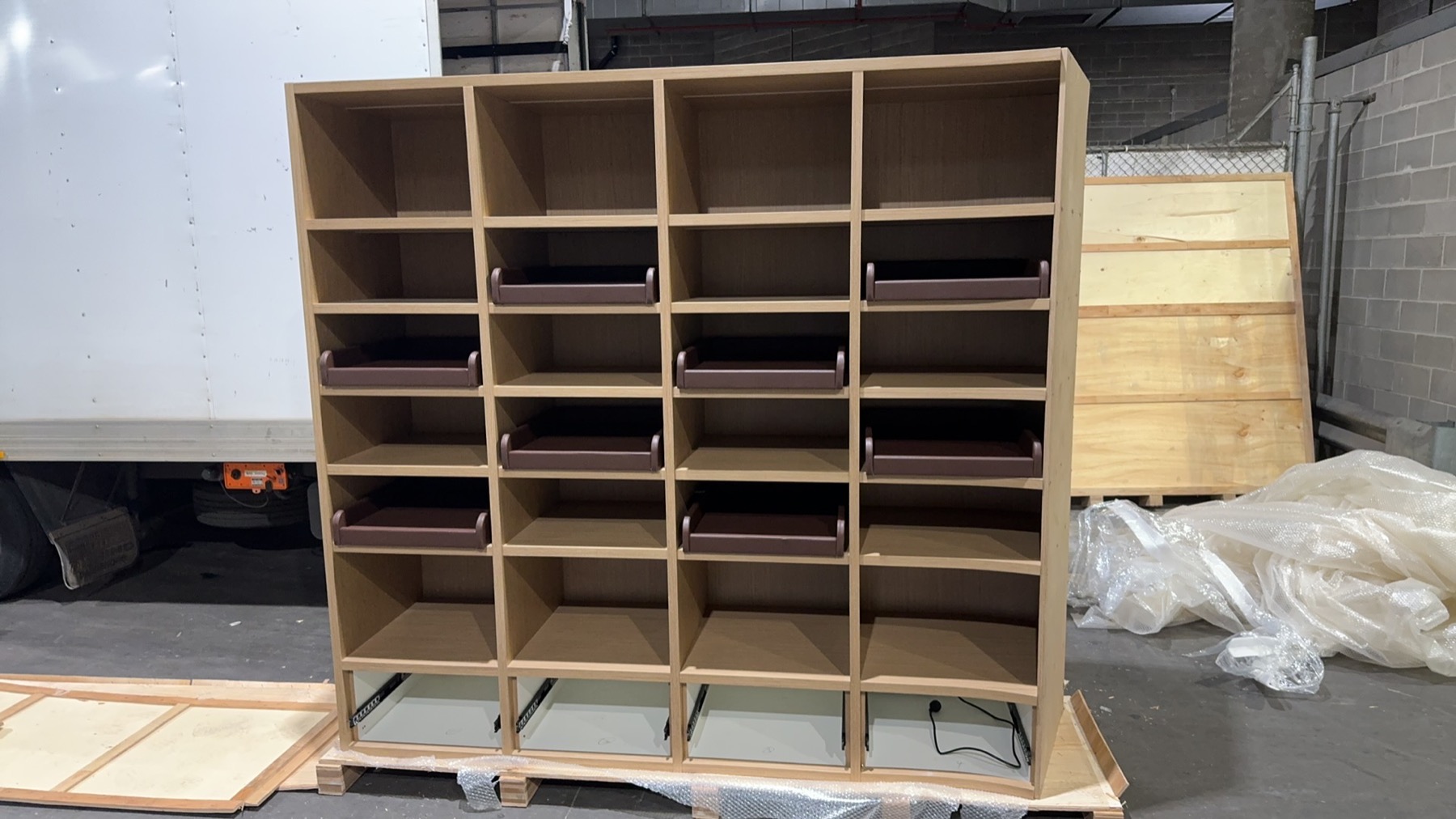
Best fit for this guide: Richmond, Cremorne, Abbotsford, South Yarra, Mulgrave, Clayton, Notting Hill, Mount Waverley and nearby business customers planning office furniture, shelving, boxed files, light commercial stock or small warehouse items.
Request a free moving quote if you want JD Movers to review your office route, access, item list and 10 tonne vs 12 tonne truck requirements.
Verified route and office-planning scope
| Case detail | Planning note |
|---|---|
| Pickup area | Richmond area |
| Delivery area | Mulgrave area |
| Truck planning | Verified 12 tonne truck; commercial furniture is conditional guidance, not a recorded inventory |
| Typical fit | Guide applies to offices, shelving, boxed files and workstations when those items are declared |
| When 10 tonne may suit | Smaller office move, limited furniture, fewer boxes and easier loading access |
| Main risk | Downtime, poor labelling, lift/loading access issues and fragile equipment being mixed with heavy furniture |
Why an office move may need 12 tonne planning
The distance from Richmond to Mulgrave is only one part of the job. The more important question is what needed to be moved and how quickly it needed to be usable again. Office furniture takes truck space differently from household furniture. Desks, shelving, cabinets and stock do not always stack neatly, and many items need to be kept upright or separated from sharp edges.
A 12 tonne truck gives the team more flexibility to separate shelving, boxed files, workstations, chairs and equipment. It can reduce the chance of squeezing commercial pieces into a load that should have been planned with more room.
Richmond pickup planning
Richmond office pickups can involve narrow streets, loading zones, shared building entries, lifts, stairs or busy commercial traffic. The truck position should be confirmed before the crew arrives, especially if the move is near a main road or business precinct.
Before moving day, the office should be labelled by department, room or priority. Items that must be used first at the new workplace should be clearly separated. This helps the team load in a way that supports the delivery setup.
Mulgrave delivery planning
Mulgrave deliveries may involve business parks, warehouse-style units, offices, showrooms or mixed commercial spaces. The delivery path should be checked for loading dock access, roller doors, lift availability, stairs, parking clearance and where furniture should be placed.
The best office relocation is not just completed when the truck is empty. It is completed when desks, shelving, files and equipment are placed in a way that helps the business restart faster.
10 tonne vs 12 tonne for office relocation
A 10 tonne truck can suit a smaller office relocation with fewer desks, boxed files and simple access. A 12 tonne truck is often better when the move includes multiple workstations, commercial shelving, filing cabinets, stock, appliances or equipment that should not be compressed into a tight load.
For household comparison, a 10 tonne truck is commonly used for many prepared 3-4 bedroom moves, while a 12 tonne truck is more often used for larger 4-5 bedroom homes or furniture-heavy relocations. Office moves do not follow bedroom count, but the same idea applies: the more bulky furniture, shelving, boxed files and access restrictions there are, the more important truck capacity becomes.
Truck size should be based on the item list and access, not only the number of staff. A small team can still have a large volume of shelving, stock or equipment.
Commercial relocation planning table
| Office item | Main risk | Preparation that helps |
|---|---|---|
| Desks and workstations | Loose parts, awkward angles and surface marks | Remove loose accessories and label destination areas |
| Filing cabinets | Heavy drawers, locked contents and tipping risk | Empty or secure drawers and keep keys available |
| Monitors and IT equipment | Screen damage, cable confusion and setup delays | Pack separately, label cables and keep priority devices together |
| Commercial shelving | Sharp edges, unstable sections and awkward loading | Disassemble where practical and protect high-contact points |
| Boxed files and stock | High weight and poor room placement | Use strong boxes and label by department or delivery zone |
What to prepare before moving day
Label boxes by destination
Labels should show where items go at the new workplace, not only what is inside. Department, room or zone labels help the crew unload in a useful order.
Separate fragile equipment
Monitors, printers, phones, small electronics and fragile tools should not be mixed with heavy shelving or filing cabinets. Pack and label them separately.
Plan furniture disassembly
Some desks, shelving units and boardroom tables may need partial disassembly. Decide this before moving day so the crew is not delayed by unexpected furniture size.
Confirm building access
Check loading zones, lift bookings, security access, roller doors, building manager rules and after-hours requirements before the move starts.
How commercial items are protected
Commercial items are protected by combining wrapping, separation and loading order. Some items need moving blankets, some need to remain upright, and some need to be kept away from sharp metal shelving or heavy cabinets.
The goal is to move the office safely while keeping related items together. If desks arrive without their cables, shelves arrive without parts, or boxes are delivered to the wrong area, the business loses time after the removalists leave.
Common office relocation risks
- Underestimating how much space shelving takes in the truck.
- Packing IT equipment with heavy office supplies.
- Forgetting lift or loading dock bookings.
- Not labelling boxes by delivery department.
- Leaving staff to make placement decisions during unloading.
- Moving during business hours without planning access and parking.
- Failing to separate priority equipment needed immediately after delivery.
How to reduce business downtime
Downtime is reduced by deciding what must be usable first. Reception items, key workstations, internet hardware, stock needed for trading and essential files should be identified before loading. That way, the truck can be loaded and unloaded with a restart plan in mind.
For a Richmond to Mulgrave office relocation, the aim is to finish with the new workplace ready to rebuild quickly. The truck should not be loaded randomly. It should be loaded so the first items needed at delivery are easy to access at the right time.
After-hours and building access planning
Many commercial moves work better outside normal trading hours, but after-hours moving needs extra preparation. Building access cards, lift bookings, loading dock approval, alarm codes, security contacts and parking rules should be confirmed before the truck arrives. If one person has the keys and they are delayed, the entire move can slow down.
For commercial sites, it also helps to nominate one decision-maker at pickup and one at delivery. The crew should not need to ask several staff members where every desk or cabinet belongs. A simple floor plan or room list can save time and reduce confusion when the 12 tonne truck is being unloaded.
Trust proof from Melbourne customers
JD Movers focuses on careful loading, communication and practical planning. One Google 5-star reviewer said their items were “stacked properly and safely”. For office moves, that matters because stable stacking protects furniture, commercial items and business equipment during the route.
Commercial customers need more than strong lifting. They need a move that respects access rules, placement plans and the need to reopen quickly.
5, 10 and 12 tonne truck planning
JD Movers does not choose a truck by suburb name alone. We compare the property type, bedroom count, box estimate, lift or stair access, parking distance, bulky furniture and whether the job is a full home move, apartment move, office move or selected-item move.
| Truck option | Best fit | Planning note |
|---|---|---|
| 5 tonne truck | 1-2 bedroom units or apartments, small item lists, student moves, compact access or partial furniture moves. | A 5 tonne truck is useful when the load is smaller and parking or apartment access is tighter. |
| 10 tonne truck | 3-4 bedroom apartments, units, townhouses or prepared smaller homes with boxes, beds, lounges and whitegoods. | A 10 tonne truck gives more capacity for a normal household load while still being practical for many Melbourne streets. |
| 12 tonne truck | 4-5 bedroom homes, larger family moves, garage items, outdoor furniture, heavy pieces or commercial stock. | A 12 tonne truck is better when volume, bulky furniture or loading separation matters more than compact access. |
For a more accurate quote, send the pickup and delivery suburbs, property type, bedroom count, box estimate, stairs or lift details, parking notes and photos of large or fragile items.
Useful links for business relocation planning
- Melbourne CBD office relocation checklist
- How to reserve parking for removalist trucks
- Furniture removalists Melbourne
- JD Movers removal services
- Get a free moving quote
Get an office relocation quote
If you are moving an office in Richmond, Cremorne, Abbotsford, South Yarra, Mulgrave, Clayton, Notting Hill, Mount Waverley or another Melbourne business area, send JD Movers your pickup suburb, delivery suburb, office item list, access details, photos and preferred moving date. We can help decide whether a 10 tonne truck suits the job or whether a 12 tonne truck is more practical for the commercial volume.
Request a free moving quote from JD Movers.
FAQs about office relocation in Melbourne
Can JD Movers handle Richmond to Mulgrave office moves?
Yes. JD Movers helps with office and commercial relocations across Melbourne, including Richmond, Mulgrave and nearby business suburbs.
Is a 12 tonne truck always needed for office relocation?
No. A 10 tonne truck may suit smaller office moves. A 12 tonne truck is more practical when the job includes larger furniture, shelving, stock or many boxed files.
What information helps quote an office relocation?
Send the pickup and delivery suburbs, item list, number of desks, shelving, cabinets, boxes, access photos, lift/loading details and preferred move time.
Can office items be delivered by room or department?
Yes. Clear labels by department, room or delivery zone help the crew place items where they are needed at the new office.
Can JD Movers help reduce business downtime?
Yes. A clear item list, access plan, priority equipment list and delivery placement plan help the move finish in a way that supports faster reopening.
Related JD Movers service areas
This real moving case is connected to local suburb pages where JD Movers explains access, truck size planning and quote details for similar Melbourne moves.
Customers often mention that items are “stacked properly and safely”. Use the related suburb pages together with this case to plan the right 5, 10 or 12 tonne truck before moving day.