
Vermont removalists for houses, units and furniture
JD Movers provides removalist services for Vermont VIC 3133, including assessed house, townhouse, unit, apartment and furniture moves. A useful plan starts with the exact work rather than a suburb or bedroom label. Send every address, the preferred date, a complete inventory, access photographs and details of any item that is heavy, fragile, unusually long or likely to need dismantling.
People searching for Vermont removalists may be planning anything from selected furniture to a multi-room household. Those scopes cannot be matched to the same vehicle or access assumptions. Carton volume, garage and outdoor contents, stairs, lift rules, driveway clearance, the distance from the truck and stop order all affect the assessment. A short local journey does not make the physical handling simple.
JD Movers reviews the written scope before discussing a crew and a 5, 10 or 12 tonne truck. The owner’s bedroom ranges are initial planning references, not capacity promises. They do not guarantee one trip, a particular crew, a fixed duration, access for the vehicle or a price. The current inventory and both properties must be checked for each quote.
Vermont access and parking checks begin with the exact address
Vermont is shared by two council areas
Whitehorse City Council’s location and suburbs page lists Vermont as shared with the City of Maroondah. That boundary matters because one council page cannot confirm the rules for every Vermont address. Before relying on general information, identify the property, the road manager and the person who controls any private driveway, basement, loading area or common property.
Current signs and site conditions remain more important than an old map or a previous visit. Photograph the proposed truck position from both directions and record time limits, Permit Zone, No Parking, No Stopping or Loading Zone signs. If the position, vehicle eligibility or required approval is unclear, ask the relevant council, building manager or landowner before moving day. Do not treat a resident or visitor permit as automatic truck approval.
Record the carrying path, not only the postcode
Australia Post lists Vermont and Vermont South under the same 3133 postcode. Use the full suburb name in the enquiry and at every stop. If the property is in Vermont South, use the separate Vermont South removalists page rather than relying on the postcode alone.
For the actual route, photograph driveway slope, width, surface, turning space, gates, low branches and the safest available vehicle position. Then measure the path through doors, corridors, steps, stair turns, lifts and rooms. Whitehorse’s parking permits and zones guidance explains that specialist zones have vehicle and time conditions. A lawful short loading opportunity may still be unsuitable for the time or carrying distance of a household move.
Audited Vermont calendar evidence
A past-only calendar audit first found 107 exact, non-duplicate records matching the broad term Vermont. Fifty also contain Vermont South and were excluded from the core Vermont set. The remaining 57 Vermont records span 19 September 2020 to 19 June 2026. They are calendar entries, not a claim of 57 completed moves, 57 separate customers or 57 Vermont properties.
The audit withholds customer names, telephone numbers and exact addresses. It reports only dates, detected suburb terms, scheduled crew and truck labels, selected wording clues and unit-style address formatting. Across the 57 core entries, a 5 tonne label appears in 18, a 10 tonne label in 24 and a 12 tonne label in 13. Two-mover wording appears in 55 and three-mover wording in three. A record can contain more than one label, and the absence of a label does not prove that a vehicle or person was absent.
May 2026: Burwood East and Vermont with two-mover and 5 tonne labels
A record dated 8 May 2026 contains Burwood East and Vermont, two movers and a 5 tonne truck label. The limited audit does not establish the customer’s identity, route direction, property type, inventory, carton count, carrying distance, capacity used, number of trips, duration, price, work performed or result. It shows a scheduled combination only.
June 2026: a Vermont-to-Vermont label with two movers and 12 tonnes
A record dated 19 June 2026 uses Vermont for the local relationship and contains two movers and a 12 tonne truck label. It also uses unit-style address formatting, but the audit does not identify which address has that format or prove an apartment, floor, lift or household size. The record cannot be converted into a fuller-home story or a claim that the vehicle was filled.
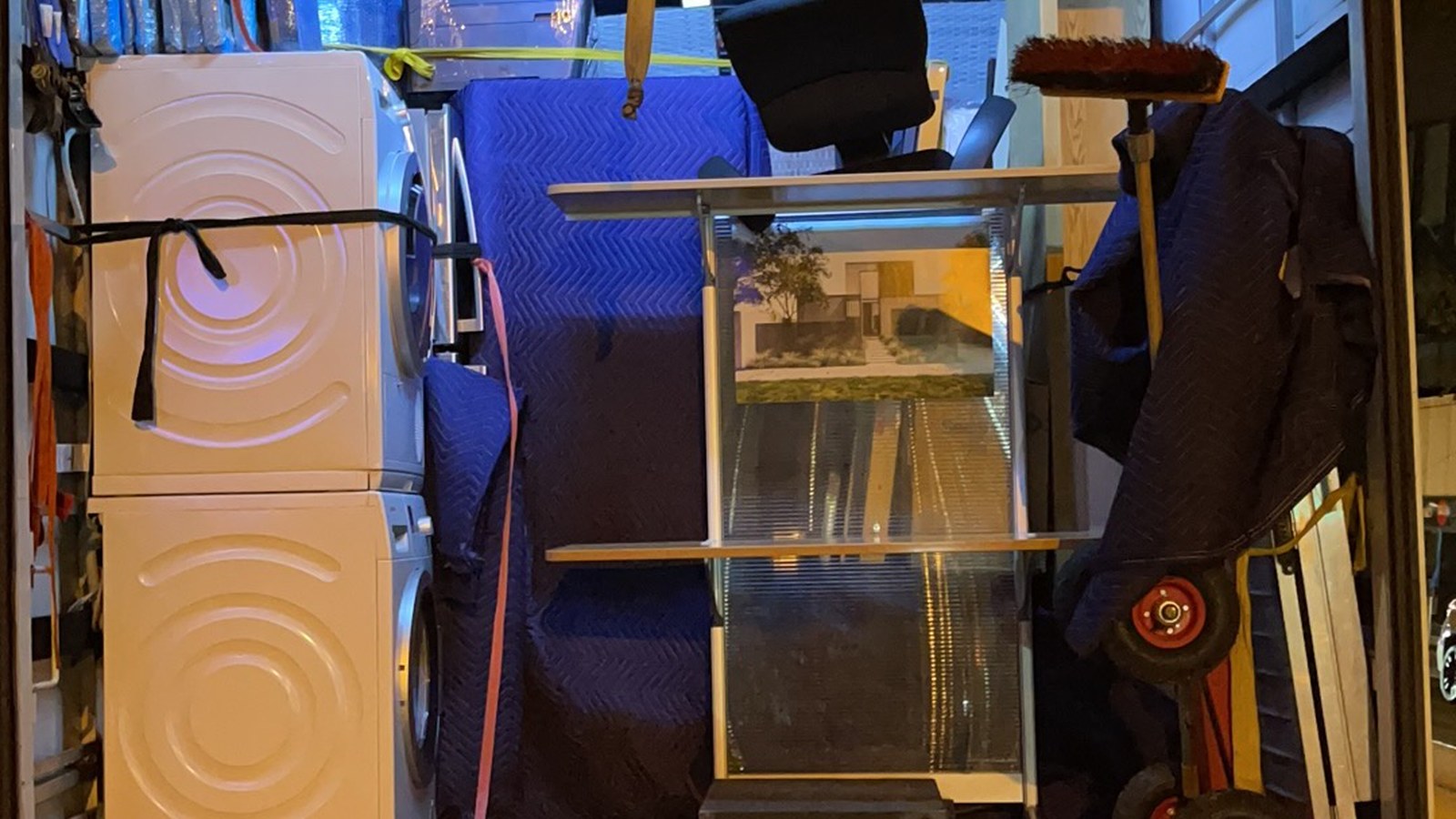
The photograph above is a separate real JD Movers job. It shows a glass display cabinet and stacked appliances protected and secured inside a truck. It is relevant to item measurement and loading order, but it is not evidence of the contents, handling or outcome of either Vermont calendar entry.
What the 57 calendar entries support and what they do not
Calendar labels are not customer case studies
Thirty of the records use unit-style address formatting, while only three contain one of the audit’s selected unit or apartment words. Those signals cannot be added together or described as 33 apartment moves. Address formatting does not prove property type, and a missing keyword does not prove that a record involved a house, unit or another category.
One record contains storage wording and one contains a selected heavy-item word. Neither establishes total service volume, the item involved or a completed outcome. No record contains one of the audit’s selected home or bedroom words, but that absence does not show that household contents were absent. Calendar notes are operational labels with uneven detail, not a research survey of customer inventories.
Truck and crew history does not choose a new booking
The historical labels show that 5, 10 and 12 tonne options and two- or three-mover wording have appeared in Vermont scheduling. They do not explain why a vehicle or crew was selected, whether it arrived, how much capacity was used, how long the move took or what the customer paid. They cannot predict a new move’s team, vehicle, trips, price or result.
The safe use of this evidence is to ask better questions. Confirm all rooms and secondary storage, measure difficult items, record stairs and long carries and check whether the proposed vehicle can be positioned. The written quote or booking confirmation for the current scope should identify the assumptions being made.
Planning unit, townhouse and house moves in Vermont
Units and apartments
For a Vermont unit or apartment, ask the building manager or owners corporation for the current move procedure. Confirm the approved loading point, lift reservation, permitted hours, basement height, service-corridor route, protection requirements, access fobs and any bond or supervision condition. A resident car space may be too short, too low or not approved for a moving truck.
Provide the floor, lift dimensions, stair alternative and distance from the vehicle to the entrance. Measure sofas, bed frames, cabinets, tables, appliances and other long pieces where the route has a lift, landing or tight turn. Include storage cages, balconies, car-space cupboards and detached garages in the inventory. Unit-style address formatting in 30 calendar records is a prompt for these checks, not proof that those records were apartment moves.
Houses and townhouses
Build a house or townhouse inventory room by room, then add the spaces often missed from the first list: garage, shed, roof storage, balcony, garden, side access and off-site storage. Count cartons separately from furniture and identify items being sold, donated, collected elsewhere or left behind. A bedroom number cannot reveal the density of furniture or stored contents.
Photograph shared driveways, slopes, gates, steps, carports, low branches and the approach for the proposed vehicle. Measure the largest pieces against doors and stair turns and state what may be dismantled. If settlement, cleaners, trades or another resident controls access, provide the available window instead of assuming the property will remain open.
Furniture and difficult-item planning in Vermont
Measure furniture and the full carrying route
A furniture-only move still needs an itemised scope. Supply photographs and dimensions for beds, sofas, dining tables, cabinets, wardrobes, appliances, mirrors, glass and stone. Identify modular furniture, loose shelves, removable doors and anything fixed to a wall. Agree what may be dismantled, who will keep the hardware and which reassembly work is included.
The display cabinet in the page photograph has a glass front and rigid frame, while the appliances beside it add dense weight and loading constraints. The image illustrates why the inventory, protective materials, trolley path and unloading order should be discussed together. See the JD Movers furniture removal service for the information used to assess a new furniture scope.
Disclose heavy, fragile and specialist items before booking
Flag any piano, safe, stone top, pool-table component, large refrigerator, glass cabinet or other difficult item in the first enquiry. Send its dimensions, known weight, construction and photographs, then show steps, slopes, flooring, door widths and tight turns at both properties. One historical heavy-item keyword is not evidence of experience with a particular object.
Extra equipment, additional people, dismantling or a specialist provider may be required. Acceptance should be confirmed for the exact item and route rather than assumed from a general service page. Keep customer-carried valuables, documents, medication and items that the mover cannot accept outside the removal inventory.
A practical Vermont moving plan
Quote-stage checks
List every pickup, delivery and storage address with its full suburb and postcode, then state the intended order. Add the preferred date, property types, floors, keys, settlement windows, lift or facility bookings and the person who controls each loading point. Photograph current signs and the route from the truck position to the largest items.
Group the inventory by room or destination and include cartons, appliances, garage, outdoor and stored contents. Mark dismantling, fragile surfaces, items that cannot be stacked and anything needed first after arrival. If the scope changes, update the estimator before the move; an earlier truck or crew discussion should not be treated as fixed.
Moving-day sequence
Reconfirm the addresses, access instructions and priority items before loading. Keep keys, documents and personal essentials with the customer. Clear the agreed carrying path, secure pets and tell the crew about any damage-prone surface or last-minute change. If a space, lift or driveway is unavailable, the operating plan may need to change.
Load with destination and unloading order in mind. Items for a later stop or storage unit should not block what must be removed first. At delivery, identify rooms and placement before furniture enters tight areas. These steps support an organised move but do not guarantee a fixed duration, one trip or an outcome.
5, 10 and 12 tonne truck planning for Vermont
The calendar audit found 18 records with a 5 tonne label, 24 with a 10 tonne label and 13 with a 12 tonne label. These are historical scheduling fields. They do not prove vehicle attendance, available capacity, completion or suitability for another customer. A new recommendation must be based on the present inventory and access.
| Truck option | Owner-provided planning range | Information still required |
|---|---|---|
| 5 tonne | Usually a starting discussion for a verified 1-2 bedroom unit or apartment, selected furniture or a partial household load. | Carton count, storage and outdoor items, longest pieces, stairs or lift, truck position, carrying distance and trip assumptions. |
| 10 tonne | Usually a starting discussion for a fully listed 3-4 bedroom move, subject to the actual furniture density and access. | Garage and shed contents, dismantling, vehicle height and length, turning space, loading point, stop order and difficult items. |
| 12 tonne | Usually a starting discussion for a checked 4-5 bedroom family move or another substantial listed scope. | Legal and physical access for the larger vehicle, complete volume, stairs or long carries, loading sequence and timing restrictions. |
Bedroom ranges organise the first conversation; they do not promise that a load will fit or that one trip will be possible. A densely furnished unit can exceed a lightly furnished house, while a larger truck can be unsuitable for a constrained driveway or loading area. Review the moving truck size guide and provide measurements instead of choosing from the label alone.
Two-mover wording appears in 55 records and three-mover wording in three. Those counts can overlap and do not prescribe a crew. Stairs, long carries, difficult pieces, dismantling and fixed access windows can change the assessment. Use the current written scope as the authority.
Packing, storage and multi-stop requirements
Prepare cartons, furniture and hardware for the agreed scope
Close and label cartons by destination and handling requirement. Keep dismantling hardware with the correct furniture and mark fragile or non-stackable boxes. Identify mirrors, artwork, electronics, plants and items needing original packaging or a separately agreed method. Confirm who supplies materials and which packing or unpacking tasks are included instead of assuming they form part of a standard move.
Separate essentials that should remain with the customer. The mover’s inventory should reflect only items being assessed for transport. If furniture dimensions or carton numbers change materially after the quote, provide the revised list before the scheduled date.
State storage rules and every stop in advance
For moving furniture into storage, provide the facility, unit level, opening hours, code or key process, vehicle height limit, lift and trolley rules and carrying distance. Number cartons and wrapped pieces, then identify what must remain accessible. One calendar record contains storage wording, but it does not establish the facility, contents, duration or outcome of a new booking.
For several pickups or deliveries, list each address in order and divide the inventory by destination. Add settlement, building and storage windows that could conflict. Loading order depends on that sequence, so a new stop or changed access time should be reported before moving day.
Compare Vermont removalist quotes on the same scope
Give each provider the same addresses, date, inventory, photographs and access evidence. Ask which crew and truck are included, when chargeable time starts and ends and how travel, waiting, parking, stairs or lift, long carries, packing materials, dismantling, difficult items, storage and extra stops are treated. Compare the assumptions and exclusions beside the rate or estimate.
Do not calculate a Vermont price from the 57 calendar records. They do not publish chargeable hours, travel, inventory, access, services performed or results. Review the current JD Movers removalist pricing guide, then request a written assessment for the complete scope. Update the provider if an address, date, inventory or access condition changes.
A decision-ready quote request normally includes:
- Every address with the full suburb name and intended stop order.
- The preferred date and all key, settlement, building or facility windows.
- Property type, floors, stairs, lifts, parking distance and carrying route.
- A room-by-room inventory including cartons, garage, outdoor and storage items.
- Photographs and measurements for large, fragile or difficult pieces.
- Packing, dismantling, reassembly, storage and priority-delivery requirements.
Nearby service areas and the correct Vermont page
This page is for Vermont VIC. The nearby published directory includes Vermont South, Mitcham, Forest Hill, Nunawading and Wantirna. Because Vermont and Vermont South share 3133, write the full suburb name rather than choosing only from the postcode.
The complete Melbourne service area directory lists other published locations. To request a Vermont assessment, send the date, full addresses, inventory, access photographs, stairs or lift, proposed truck position and difficult items through the JD Movers moving quote form.
Vermont removalists FAQ
How much do removalists in Vermont cost?
Cost depends on the current crew, truck, travel, chargeable time, inventory, access, stairs or lift, parking distance, packing, dismantling, storage, difficult items and extra stops. The calendar audit cannot calculate a local average, so request a written estimate for the complete present scope.
Can JD Movers assess a house move in Vermont?
Yes. Provide every address, room, carton group, garage, outdoor and stored item, plus driveway, parking, steps, stairs and carrying-distance information. A bedroom count is only a starting reference and cannot predict the truck, crew, number of trips, duration or price.
Do you plan unit and apartment moves in Vermont?
Yes. Send the floor, lift reservation, stair alternative, loading point, basement clearance, common-area rules, permitted hours, carrying distance and complete inventory. Unit-style formatting in historical records is a planning clue, not a count of completed apartment moves.
Can you move furniture only in Vermont?
Furniture-only enquiries can be assessed from an item list, photographs, dimensions and access at both properties. Identify dismantling, glass or fragile surfaces, stairs, lifts, long carries and unusually large pieces. A short list can still require detailed handling and vehicle planning.
Can heavy or awkward items be assessed?
Yes, subject to the exact item and route. Provide dimensions, known weight, construction and photographs, plus steps, slopes, flooring, door widths and turns. Extra equipment, people, dismantling or a specialist provider may be required and must be confirmed before booking.
Which truck size may suit a Vermont move?
A 5 tonne truck is an initial range for many verified 1-2 bedroom unit or apartment scopes, 10 tonnes for many checked 3-4 bedroom moves and 12 tonnes for many checked 4-5 bedroom family moves. Inventory density and access can change that discussion.
What should I send for a Vermont moving quote?
Send the preferred date, every full address, property types, stop order, complete inventory, carton estimate, access and parking photographs, stairs or lift details, carrying distance and difficult items. Add packing, dismantling, storage or timing requirements that need to be included.
Do Vermont and Vermont South use the same service-area page?
No. They share postcode 3133 but are separate suburb names. Use this page for Vermont and the dedicated Vermont South page for a Vermont South address. Writing the full suburb at every stop helps avoid an incorrect service-area or route assumption.
Planning a Vermont move? Submit the date, full addresses, inventory, access evidence and difficult-item details through the JD Movers quote form.