
Office Relocation Planning Guide for Melbourne Businesses
Quick answer: start an office relocation with a complete inventory, one move coordinator and a plan for what must work when the business reopens. Agree on packing and furniture responsibilities, arrange IT work with your provider, confirm access at both buildings, and label each item for its destination. A truck booking alone is not a complete office move plan.
This guide helps Melbourne office managers and business owners organise the preparation and handover. For the moving services and booking scope, see JD Movers office relocation services. If either address is in the city centre, use the Melbourne CBD office relocation checklist alongside this planning guide for building and delivery-access checks.
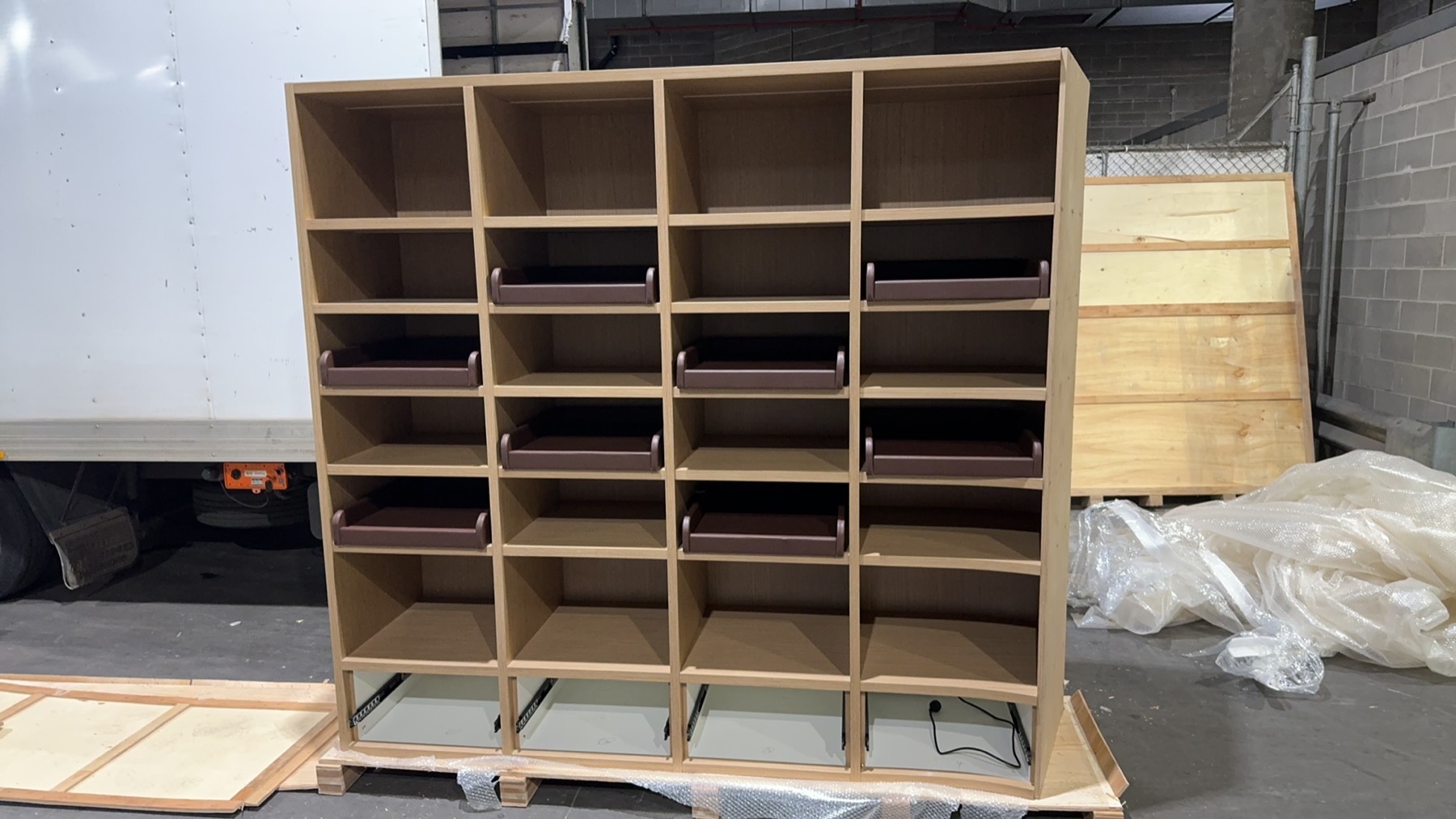
Set responsibilities and reopening priorities
Nominate a move coordinator who can maintain the inventory, confirm decisions and communicate changes. Arrange a contact at each building so the movers know who can resolve access or placement questions. Give staff a clear packing deadline and explain which areas or equipment will be unavailable during the move.
Write down the work that needs to resume first: for example, reception, customer phone lines, a nominated work area or access to essential files. These are planning examples, not a promise that every office can reopen on the same day. Agree a realistic reopening target with the people responsible for furniture placement, IT and building readiness.
- Business coordinator: confirms the scope, inventory, destination layout, priorities and internal communications.
- Building contacts: confirm access requirements, bookings, keys and the permitted moving window at each property.
- IT provider or internal IT team: manages backups, shutdown, equipment preparation, network readiness and reconnection.
- Moving team: confirms the agreed packing, handling, transport and furniture tasks included in the quote.
WorkSafe Victoria’s office-relocation guidance recommends an organised process with assigned responsibilities and appropriate moving personnel and equipment. Review the handling risks with staff and relevant health and safety representatives. Do not leave employees to improvise awkward furniture moves or assume that lifting technique alone controls the risks.
Create an inventory that matches the new office layout
List what is moving, what will stay and what needs a separate arrangement. Staff numbers are not a substitute for this list: a small office can still have a large archive, storage area or bulky meeting-room furniture.
- Count desks, chairs, meeting tables, cabinets, shelving and packed equipment.
- Add dimensions and photos for large, heavy, fragile or unusually shaped items.
- Record approximate box quantities, including files, kitchen contents and supplies.
- Identify furniture that may require dismantling or reassembly, and confirm who will perform that work.
- Mark items that need specialist assessment, leased-equipment approval or a separate contractor.
- Assign each item a destination room, zone or workstation shown on the floor plan.
Use the same room and workstation codes on boxes, furniture and the layout. An example label is Level 2 / Finance / Desk F-04 / Box 1 of 3. Identify confidential material without exposing its contents on the outside of a box. Keep parts and fixings labelled with the corresponding furniture item.
For bulky pieces, see our heavy and fragile furniture moving guide. Let the team recommend the vehicle and handling plan from the actual inventory and access. A bedroom-count comparison or truck-tonnage label is not a reliable office-capacity calculation.
Arrange IT handover and control of business records
Moving packed equipment and making it operational are separate tasks. Agree the IT schedule with your provider before the move: what needs backing up, when equipment can be disconnected, who will reconnect it and what will be tested before staff return. Confirm that the destination’s internet and other required services will be ready.
Label equipment and its packed accessories by workstation or destination. Keep the restart sequence separate from the moving inventory so the team knows which packed items need priority placement without needing access to business systems.
- Have the authorised IT team confirm backups and recovery arrangements before shutdown.
- Agree who packs and transports computers, servers, specialist printers and other sensitive equipment.
- Keep passwords, access codes and recovery information out of box labels, public floor plans and ordinary quote attachments.
- Nominate a responsible person for confidential records and apply your organisation’s handling policy.
- Confirm who will test connections and essential functions after delivery.
Do not assume that data backup, server installation, software setup or telecommunications work is included in a removal quote. Confirm those responsibilities separately with the relevant provider.
Confirm the moving window and access at both buildings
Check the pickup and delivery arrangements before finalising the schedule. A suitable unloading area at one address does not solve a blocked lift or unavailable loading bay at the other.
- Confirm loading-bay reservations, permitted vehicle dimensions and the carrying distance.
- Check goods-lift door and internal dimensions, booking times and any protection requirements.
- Provide stairs, narrow corridors, difficult turns and other access constraints.
- Agree who will arrange building approvals and meet the crew, including any security sign-in.
- Keep an alternative contact available if the nominated person is delayed.
For a street-parking move, use our removalist parking preparation guide and confirm the current rules with the relevant authority or building manager. After-hours moving depends on crew availability and access approval; request the required window rather than assuming it is available.
Pack for the destination, not just for collection
Confirm the agreed packing scope and have loose items ready by the packing deadline. Use suitable boxes, protect fragile equipment and avoid making file boxes excessively heavy. Keep labelled priority items together, and ask the movers to confirm preparation for cabinets, shelving and furniture with loose parts. Maintain clear access routes during packing and unloading.
Use a moving-day and reopening handover checklist
Before loading
- Review the agreed inventory, access arrangements and destination layout with the moving team.
- Identify items that are not moving, priority deliveries and any changes since the quote.
- Check that loose contents and furniture parts have been prepared as agreed.
- Have the responsible person retain control of records, keys and IT information that need separate handling.
At the new office
- Direct items to the labelled rooms or workstations and keep exits and working routes clear.
- Check the delivered inventory and record any concerns with the team promptly.
- Confirm which agreed furniture tasks are complete and which remaining tasks belong to another contractor.
- Have the IT provider complete reconnection and the required operational checks.
- Tell staff what is ready, what is still restricted and who to contact about missing items or setup problems.
Physical delivery does not by itself prove the business is ready to reopen. Check the essential functions you identified at the start, then confirm the staff-return and customer-communication plan.
Also review address changes for customers, suppliers, couriers, your website and relevant business registrations. The Australian Government’s guide to updating business details explains which agencies and records may need updating. Use that guidance for your business structure and circumstances; a moving checklist does not replace registration or compliance advice.
Prepare the details for an office relocation quote
Send the pickup and delivery suburbs, preferred dates, complete inventory, large-item photos, destination layout and access restrictions. Include the required packing, dismantling or reassembly work and any staged-delivery or priority-placement needs.
Office moving costs can vary with the inventory, handling, carrying distance, building access and agreed schedule. Ask for the scope, exclusions and any extra charges in writing. Truck and crew recommendations should follow the load and access assessment, not the number of employees alone.
Request an office relocation quote, or contact JD Movers to clarify the preparation needed before booking.
Office relocation planning FAQs
How early should we start planning an office move?
Start when the destination and likely timing are known. Building approvals, IT arrangements, furniture preparation and staff communication can have different lead times. Confirm these dependencies before committing to a moving and reopening schedule.
Does every office move need a large truck?
No. The complete inventory, item dimensions, protection needs and access limits determine the vehicle plan. Employee count and household bedroom comparisons cannot reliably size an office move.
Can an office move take place after hours?
That depends on crew availability and the rules at both buildings. Include the required moving window, loading-bay and lift bookings, and security arrangements when requesting a quote.
Do removalists reconnect computers and office networks?
Arrange backups, disconnection, reconnection and testing with your IT provider. Confirm which packed equipment the movers will transport and which technical tasks need a separate provider.
Can furniture and boxes be placed by department?
Provide a labelled floor plan and matching room or workstation codes, and agree the placement requirements before moving day. Have a decision-maker available at delivery to resolve questions.
Can you guarantee that the business will have no downtime?
No blanket zero-downtime promise is made in this guide. Furniture delivery, building readiness, IT setup and operational checks all affect reopening. A clear sequence and agreed responsibilities help you plan the disruption.
Related Melbourne office moving resources
For broader service information, see JD Movers removal services. If your workplace is in the south-east, the Mulgrave service-area guide provides local access and quote-preparation context. Use it alongside your own inventory and building instructions.
Official references checked 19 October 2026: WorkSafe Victoria’s office-relocation guidance and business.gov.au’s business-details update guidance, linked in the relevant sections above.