
How to Pack Fragile Items for Moving: Protection and Access Checklist
Quick answer: list the items that need special care, choose suitable packing materials, wrap small fragile pieces individually and label cartons by room. Send photos of large or delicate items and the complete carrying route. Before moving day, confirm who will supply materials, pack each item and prepare it for loading.
Fragile items are not only glassware and plates. Mirrors, framed photos, artwork, lamps, TV units, timber furniture, cabinet doors, marble-top pieces and whitegoods surfaces can all be damaged if they are packed or loaded without a plan. A careful move starts before moving day, with the right boxes, wrapping, labels, access photos and loading order.
Who this fragile-item guide helps
Use this guide when preparing glassware, mirrors, framed items or delicate furniture for a Melbourne move. Whether you are moving in Ashburton, Camberwell or another suburb, check the actual doorway, stair and lift route rather than assuming access from the address or property type.
Include the full furniture and carton inventory, identifying anything that cannot be stacked. Agree on packing and handling requirements before the vehicle is confirmed; extra truck space does not replace suitable protection.
Identify fragile items and agree on packing responsibilities
- Item list: note glassware, mirrors, artwork, screens, lamps, loose glass panels and furniture with delicate surfaces.
- Photos and dimensions: show the whole item, exposed edges, removable parts and any existing damage that affects handling.
- Who packs each item: confirm whether you or the removalist will provide materials, wrap the item and prepare it for loading; do not assume these tasks are included.
- Special requirements: Manufacturer or specialist instructions should be shared before packing. Ask whether unusual, valuable or delicate items need a separate assessment.
- Access and placement: record stairs, turns, lifts and the intended destination room, plus any cartons that must remain accessible.
Why stairs and access change fragile-item packing
Fragile packing should match the access path. If a box, mirror or cabinet needs to move through stairs, tight corners, a lift or a long hallway, it needs to be easier to hold, clearly labelled and protected on the edges most likely to touch walls or rails.
Measure narrow doors, stair landings and tight turns for larger items. Photos should show the route as well as the item itself. Tell the removalist about any carton or piece that is awkward to carry so the handling plan can be discussed before arrival.
WorkSafe Victoria’s moving and lifting guidance highlights the importance of size, weight, handling arrangements and clear access. Describe awkward loads and discuss suitable equipment or assistance; do not try a difficult lift just to demonstrate that an item can be moved.
Allow for fragile-item space when choosing a truck
Fragile cartons and delicate furniture may need positions that keep other items from pressing on them. Tell the removalist which pieces cannot have anything stacked above them, and include those requirements with the full inventory. Compare the Melbourne moving truck size guide before confirming the vehicle.
Truck size should not be chosen only from the number of bedrooms. A smaller home with many fragile boxes, mirrors, artwork and delicate furniture may need more planning than a larger home with simple furniture.
Start with the right boxes and materials
Choose clean, dry, undamaged cartons suited to the contents and the manufacturer’s rating. Use manageable smaller cartons for dense items. Wrap pieces separately and add cushioning to limit movement without forcing them together or pressing on delicate parts.
Assemble and close the carton according to its design. Extra tape does not repair a weak carton or make an overloaded one suitable. Use our box closure checklist and compare material options in the moving boxes price guide.
Choose protection for the actual surface and condition, not simply the item category. Identify any required orientation or unpacking instructions on the packaging and discuss them with the crew before loading. A label is a reminder, not a substitute for appropriate support and protection.
Fragile quote and protection factors
A useful quote for fragile items needs more than the suburb names. It should include the type of fragile items, how many boxes there are, whether stairs are involved and whether special furniture protection is needed.
| Quote factor | What to send JD Movers | Why it matters |
|---|---|---|
| Fragile item types | Glassware, mirrors, artwork, framed photos, TV, lamps, marble or delicate timber furniture | Different items need different wrapping and loading positions. |
| Box condition | Photos showing carton condition, closure and labels; identify any package that must not have items placed above it | Not every fragile package is stackable; the crew needs to know the actual restrictions. |
| Access path | Stairs, lift, hallway turns, driveway, parking distance and tight entry photos | Access changes how fragile items should be carried. |
| Complete inventory and separation | Carton count, furniture dimensions and items needing clear space or special positioning | The vehicle and loading plan depend on the full load, not a bedroom-to-truck rule. |
| Packing responsibilities | Which items will be packed, what materials are needed and any manufacturer or specialist instructions | Confirm the agreed work and exclusions before moving day. |
How to pack glassware, mugs and crockery
Wrap pieces individually and separate them so hard surfaces cannot strike one another. Use suitable dividers or cushioning for the item’s shape, and fill gaps gently rather than squeezing in more contents. Keep plates on edge in a suitable cushioned arrangement, with the carton weight manageable.
Support glass and ceramic items by their main body rather than using a handle or spout as a lifting point. The Canadian Conservation Institute’s glass and ceramics guidance explains these handling precautions. Set aside cracked, repaired or especially delicate pieces for advice before packing. See our glassware and stemware packing guide for the more detailed household checklist.
Label the box on more than one side. Write the destination room and mark it as fragile. If the box should not be stacked under heavy items, make that clear before loading.
How to prepare mirrors, artwork and framed photos
Record condition and dimensions before arranging protection for mirrors or framed items. Keep them out of busy carrying routes while the packing plan is being agreed. Packaging must protect the item without pressing on fragile decoration, glazing or an exposed painted surface.
A framed print behind glass, an unframed painting and a large mirror do not necessarily need the same method. The Canadian Conservation Institute’s painting-wrapping guidance explains why some works need special support and why wrapping must not contact the paint surface. Ask a suitable specialist about unstable, damaged or valuable pieces; this general checklist is not a conservation packing procedure.
Share the agreed protection, orientation and handling instructions before loading. Do not assume a later loading position will make inadequate packaging acceptable. Our artwork preparation guide covers the condition and access information to gather first.
Furniture protection before loading
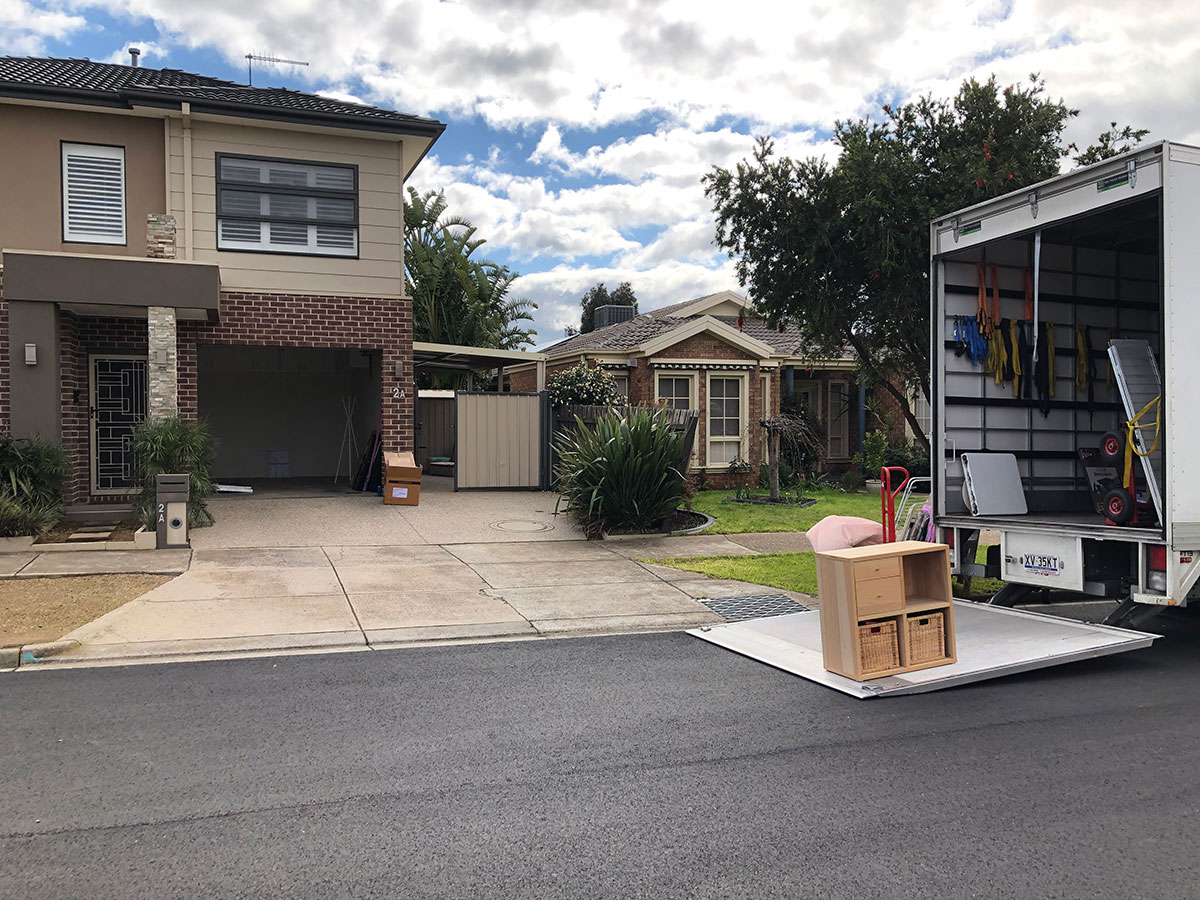
The photo shows a small cabinet on a truck tail lift; it does not demonstrate a complete fragile-item packing method. For your own furniture, identify exposed corners, loose shelves, glass panels and delicate finishes, then agree on protection suited to the item before it is carried outside.
Timber, glass, painted surfaces and cabinet doors need space around them. Heavy items should be supported, while delicate surfaces should be kept away from sharp edges and unstable stacks.
Loading order for fragile items
Loading order should match the item, packaging and planned stops. Do not assume that a cabinet, shelf or delicate furniture surface can support other items. Tell the crew which cartons must not be stacked under other loads and which pieces have special positioning requirements.
Keep fragile groups identifiable during loading and confirm their destination rooms before unloading. A larger truck does not replace suitable wrapping or a clear handling plan; the crew still needs the item list and any special instructions.
Common fragile-item packing mistakes
- Using large boxes for heavy fragile items.
- Leaving contents free to move, or overfilling until cushioning presses on delicate parts.
- Not labelling fragile boxes by room.
- Packing mirrors or artwork without corner protection.
- Forgetting to tell movers which items are high-risk.
- Leaving fragile items in hallways where they can be knocked during loading.
Room-by-room fragile item plan
Start with non-essential items, leaving daily-use kitchen items until the final stage. Kitchens may include glassware, mugs, plates and small appliances. Living rooms may include lamps, framed photos, TV units and delicate decor. Bedrooms may include mirrors, bedside lamps and glass wardrobe panels. Study rooms may include monitors, screens and boxed electronics.
Label each box by room and item type. A box marked “fragile” is helpful, but “kitchen fragile – glasses” or “bedroom fragile – lamp” is more useful when unloading.
Final checks before collection and at delivery
- Match the fragile-item list to the actual cartons and furniture being moved.
- Confirm who is completing any remaining packing before an item is carried outside.
- Show the crew unusual pieces, existing damage, removable parts and packages that must not support other loads.
- Keep the carrying route clear and identify the destination room for each group.
- At delivery, place packages in the agreed rooms and check their condition before discarding protective materials.
- If you notice a problem, record it and contact the moving team promptly; keep relevant packaging and photos.
Useful links for planning a careful move
- How to pack boxes for moving house
- Furniture removalists Melbourne
- How to safely pack artwork
- Moving house checklist Melbourne
- JD Movers removal services
- Camberwell removalists
- Ashburton removalists
- Get a free moving quote
Get a fragile-item moving quote
For a Melbourne move, send JD Movers both suburbs, the full furniture and carton inventory, the fragile-item list, access photos and your preferred date. State which items you will pack and what assistance you want included in the quote. The team can assess the requested work, access and vehicle requirements before confirming arrangements.
Get a free moving quote from JD Movers and include photos of fragile furniture, boxes, stairs, driveway and parking access so the moving plan matches the real job.
Common questions about packing fragile items
Should fragile boxes go in the truck last?
Not always. Fragile boxes should go where they are protected from pressure and movement. The best position depends on the load, box strength and item type.
Can removalists move mirrors and artwork?
Ask before booking and send photos, dimensions, condition details and the carrying route. The required packing and handling depend on the item. Some large, damaged or conservation-sensitive pieces need specialist assessment or separate arrangements; do not assume every item is covered by a standard move.
Who is responsible for packing fragile items?
Confirm this in the quote and booking arrangements. Identify who supplies materials, who packs each item and what must be ready before collection. Tell the team if the agreed preparation changes.
What should I keep with me instead of the truck?
Keep passports, jewellery, medication, personal documents, small valuables and essential electronics with you rather than in the truck.
How do I get an accurate quote?
Send the route, bedroom count, box estimate, fragile item photos, access photos and preferred moving date. The more accurate the information, the better the quote and truck plan.
Is a fragile label enough to protect the contents?
No. A label communicates a handling need but does not provide cushioning, strength or restraint. Use suitable packaging and explain any special requirements before loading.