
DIY Moving vs Removalists Melbourne | Dandenong Route Guide
Verified route, separate DIY comparison: an anonymised June 2026 calendar record confirms a Dandenong North-to-Upper Ferntree Gully move using two movers and a 10 tonne truck. The record does not state the property type, inventory or that the customer attempted a DIY move. The comparison applies to customers deciding between those options.
DIY moving can work when the move is genuinely small. It starts to fall apart when the load includes furniture, whitegoods, mattresses, boxes, stairs, longer driving distance or helpers who are not used to lifting together. This case explains how to compare DIY moving with professional removalists in a practical Melbourne situation.
Request a free moving quote from JD Movers if you want to compare a DIY plan with a professional 10 tonne or 12 tonne truck setup. Send the route, bedroom count, box estimate, major furniture list and access photos so we can recommend the right option.
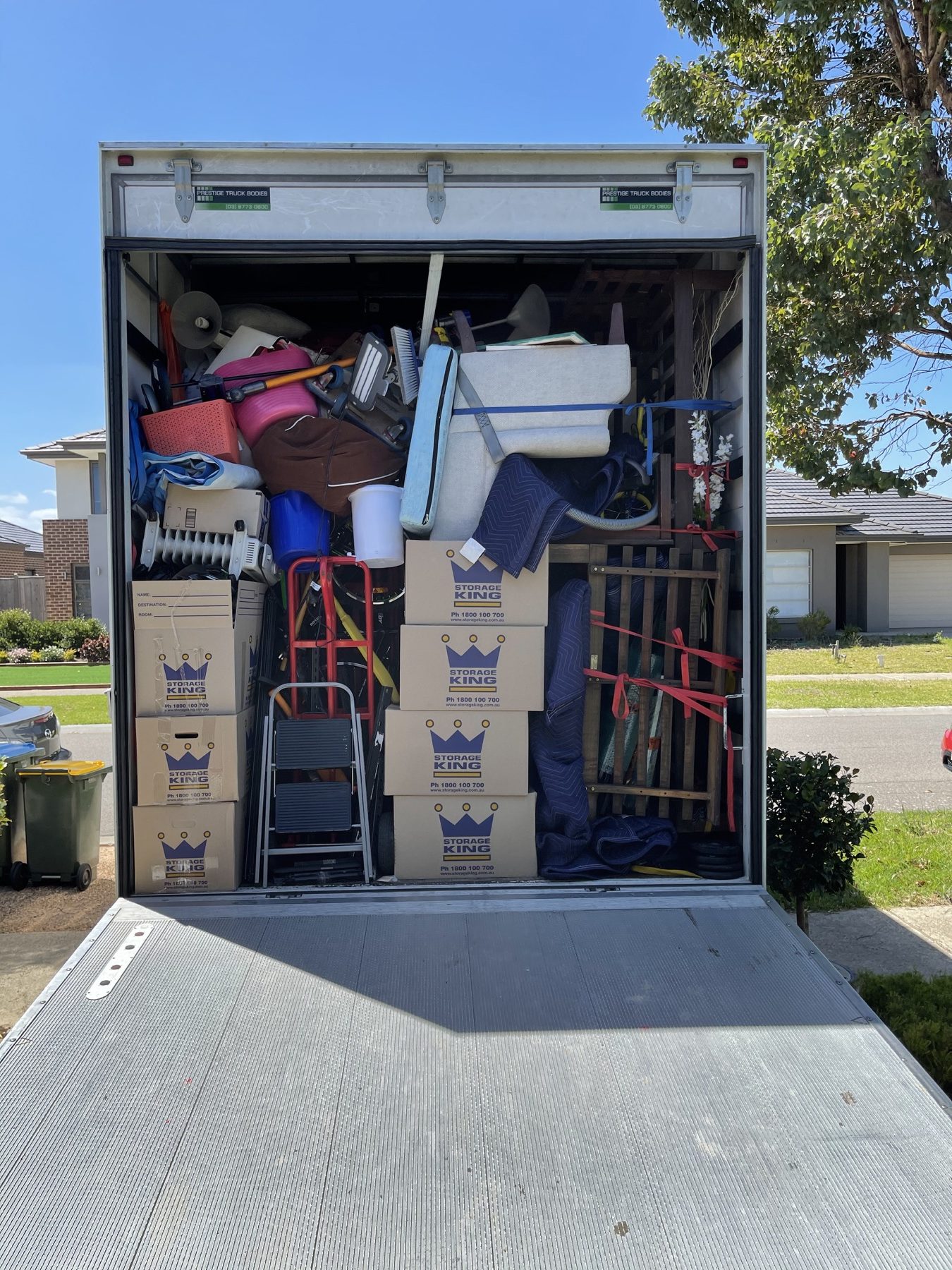
Separate 10 tonne truck-load example
The real JD Movers photo used in this article shows why DIY moving is often harder than it first appears. A proper truck load is not just a pile of boxes. Furniture, cartons, soft items and loose household pieces need to be positioned so they do not shift, crush each other or slow the unload.
For a Dandenong North to Upper Ferntree Gully move, the truck load matters because the route is not just around the corner. Once the truck leaves, the furniture needs to travel safely through suburban roads, hills and destination access. The better the loading order, the easier the delivery becomes.
Verified route and DIY-comparison scope
| Calendar record | Anonymised June 2026 JD Movers booking |
| Route | Dandenong North to Upper Ferntree Gully |
| Move type | Verified two-mover, 10 tonne route; property type and inventory are not recorded |
| Truck setup | 10 tonne moving truck with two removalists |
| Usually suits | Many 3-4 bedroom style moves, depending on volume and access |
| DIY lesson | Conditional DIY comparison: loading skill, protection, trip count and time |
When DIY moving can work
DIY moving can be practical for very small loads. A student room, a few boxes, a light mattress, a small delivery or a simple local move with no stairs may not need a full removalist team. It can also work when the customer has strong helpers, a suitable vehicle and enough time to load slowly.
The key is being honest about the size and difficulty of the move. If the job is close to a full 3-4 bedroom home, DIY can quickly turn into multiple trips, tired helpers, awkward lifting and rushed packing. That is where the first simple plan becomes a long day.
Where DIY moves become difficult
The difficult part is usually not one single item. It is the combination of many small problems: a fridge that needs to stay upright, a mattress that needs protection, boxes that are too heavy, a sofa that turns badly through a hallway, a washing machine that needs careful handling, and a destination that is further away than expected.
In this Dandenong North to Upper Ferntree Gully case, a 10 tonne truck made sense because the job needed more than a small van. The truck gives the crew room to organise the load, group boxes, protect furniture and reduce the number of trips. A DIY vehicle that is too small can turn the same move into repeated loading and unloading.
10 tonne vs 12 tonne truck guide
| Truck size | Usually suits | DIY comparison point |
| 10 tonne truck | Many 3-4 bedroom moves, townhouses and larger units | Often reduces repeated DIY trips and gives enough room for boxes, furniture and whitegoods |
| 12 tonne truck | Many 4-5 bedroom style homes and fuller family loads | Useful when the load has more garage items, outdoor furniture, storage and bulky pieces |
| DIY van or trailer | Very small loads, light items and short-distance moves | Can become inefficient if the move needs several trips or difficult lifting |
Loading is the main difference
Loading is not only about fitting everything inside. Heavy items need to sit low and stable. Fragile pieces need separation. Mattresses, boxes, whitegoods and furniture need to be positioned so they do not rub, fall or crush each other. A poorly loaded vehicle can damage furniture even when the driving distance is not long.
Professional removalists load in a sequence. The team thinks about what should go in first, what needs protection, which items need to be kept upright, and what should come out first at delivery. That planning is difficult to copy when helpers are tired or when the vehicle is already half full.
Heavy and awkward items
DIY moves often become stressful when the first heavy item appears: a fridge, washing machine, sofa, tallboy, dining table, cabinet, desk or heavy mattress. These items are not only heavy; they are awkward. The risk is higher around doorways, stairs, tight corners, sloped driveways and wet weather.
Experienced movers are used to lifting in pairs, communicating during turns and protecting both the item and the property. That is why a professional team can be useful even when the move looks simple from the outside.
Time and trip count
Many DIY plans assume one or two quick trips. In reality, each trip includes loading, securing, driving, unloading and returning. If the vehicle is too small, the day stretches. If access is slower than expected, the time saving disappears. If helpers need breaks, the final unload can become rushed.
For a Dandenong North to Upper Ferntree Gully style move, trip count matters because the destination is not a quick loop from the pickup. A professional 10 tonne setup can be more efficient because more of the load travels together and the unload can be planned room by room.
Route and access planning
Dandenong North to Upper Ferntree Gully is a good example of a move where access and route planning should be considered before choosing DIY. The move may start in a typical suburban street, but the delivery side can involve hillier roads, narrower approaches, driveways, trees, steps or a longer carry from the truck to the door. These details matter more when the vehicle is full and the helpers are already tired.
For a professional removalist team, those access notes become part of the plan. The crew can think about where the truck should stop, which items should be loaded last, which furniture needs protection first, and whether the unload should start with large furniture or boxes. A DIY move often discovers those issues only when the vehicle is already at the destination.
Damage risk and furniture protection
DIY moving often uses whatever protection is available on the day: spare sheets, old towels or a few blankets. That can be enough for a small move, but it is risky for polished timber, glass, whitegoods, mattresses and soft furniture. A larger move needs better separation between hard edges and delicate surfaces.
JD Movers plans furniture protection, moving blankets, trolley use and loading order around the actual items. This is especially important when furniture needs to travel through multiple doorways or into a home with tighter access.
Questions to ask before choosing DIY
- How many trips will the DIY vehicle really need?
- Can the helpers safely lift the heaviest items?
- Are there stairs, long carry distances or tight turns?
- Do you have enough blankets, straps and equipment?
- Will the fridge, washing machine, mattresses and fragile items travel safely?
- Will you still have enough energy for the final unload?
- Would a 10 tonne or 12 tonne truck reduce the risk and trip count?
Trust proof from Melbourne customers
JD Movers is shown on its testimonials page as 4.8 out of 5 based on 436 Google reviews. One 5-star Google reviewer said the team had items “stacked properly and safely”. That is exactly the point of choosing professional removalists for a larger move: careful stacking can protect furniture and make the unload easier.
Related JD Movers service areas
This real moving case is connected to local suburb pages where JD Movers explains access, truck size planning and quote details for similar Melbourne moves.
Customers often mention that items are “stacked properly and safely”. Use the related suburb pages together with this case to plan the right 5, 10 or 12 tonne truck before moving day.
5, 10 and 12 tonne truck planning
JD Movers does not choose a truck by suburb name alone. We compare the property type, bedroom count, box estimate, lift or stair access, parking distance, bulky furniture and whether the job is a full home move, apartment move, office move or selected-item move.
| Truck option | Best fit | Planning note |
|---|---|---|
| 5 tonne truck | 1-2 bedroom units or apartments, small item lists, student moves, compact access or partial furniture moves. | A 5 tonne truck is useful when the load is smaller and parking or apartment access is tighter. |
| 10 tonne truck | 3-4 bedroom apartments, units, townhouses or prepared smaller homes with boxes, beds, lounges and whitegoods. | A 10 tonne truck gives more capacity for a normal household load while still being practical for many Melbourne streets. |
| 12 tonne truck | 4-5 bedroom homes, larger family moves, garage items, outdoor furniture, heavy pieces or commercial stock. | A 12 tonne truck is better when volume, bulky furniture or loading separation matters more than compact access. |
For a more accurate quote, send the pickup and delivery suburbs, property type, bedroom count, box estimate, stairs or lift details, parking notes and photos of large or fragile items.
Useful links for comparing your options
- Melbourne removal services
- Furniture removals Melbourne
- How to choose professional removalists Melbourne
- Moving house checklist Melbourne
- How to pack boxes for moving house
- Request a free moving quote
Common questions about DIY moving vs removalists
Is DIY moving always cheaper?
Not always. DIY can work for small loads, but larger moves may involve several trips, more time, lifting risk, damaged items and tired helpers. A professional truck can be better when the load is closer to a full home move.
When should I choose a 10 tonne truck?
A 10 tonne truck often suits many 3-4 bedroom moves, townhouses and larger units when the load is organised and access is practical. It is usually much more useful than a small vehicle for furniture, boxes and whitegoods.
When is a 12 tonne truck better?
A 12 tonne truck is often better for many 4-5 bedroom style homes, larger family loads, bulky furniture, outdoor items, garage contents and higher box counts.
Can JD Movers help me compare options?
Yes. Send your suburb route, bedroom count, box estimate, large furniture list and access photos. JD Movers can recommend whether DIY, a 10 tonne setup or a 12 tonne setup is more practical.
How do I get a quote?
Use the JD Movers quote form with your pickup suburb, delivery suburb, access notes and photos of larger items.
Request a quote for a 10 or 12 tonne Melbourne move
Related JD Movers service areas
This real moving case is connected to local suburb pages where JD Movers explains access, truck size planning and quote details for similar Melbourne moves.
Customers often mention that items are “stacked properly and safely”. Use the related suburb pages together with this case to plan the right 5, 10 or 12 tonne truck before moving day.